Latest Publication
Indigenous Peoples' Leadership in Environmental Science Assessments
Environmental science assessments are one of the major areas where Indigenous Peoples are calling for and beginning to establish their own activities. Different Indigenous-led groups have established multi-Indigenous assessments. In the experiences of the authors, it is extremely common for an Indigenous person, in a discussion about environmental science assessment, to call for the need for Indigenous-led assessments. Following the disastrous glacial lake outburst flood of 2024 in Khumbu (more commonly known as the Mount Everest region in Nepal), Sherpa community members from the region began their own climate change risk assessment process.
As with the STACC report, Indigenous-led assessments provide crucial confidence-building and training grounds for early-career scholars. Indigenous-led reports can also experiment with modes of expression that are novel, such as storytelling approaches, photography, video and animation, and different types of outputs intended to reach audiences that have different linguistic requirements and different expectations for how they are to receive critical information.
Whyte, K. and Sherpa, P.Y., 2026. Indigenous Peoples' Leadership in Environmental Science Assessments. In The Routledge Handbook of Values and Science (pp. 348-362). Routledge.
Read the chapter here.
MELTING ICE AND TRANSFORMING BELIEFS
Mountains and their ecosystems have been important to religious beliefs in many regions around the world. In this Viewpoint, researchers describe how climate change in mountain regions is interpreted by local communities and how they transform their spiritual practice in response to it.
Pasang Yangjee Sherpa: knowing glaciers. Following the United Nations 2025 International Year of Glaciers’ Preservation, it is a good time to reflect on how well we know glaciers, besides their volumetric measurements that illuminate the rapid melting of ice and snow in the Himalayas.
Allison, E., Ceruti, C., Muhumuza, M., Salas Carreño, G., Sherpa, P.Y. and Lizaga Villuendas, I., 2026. Melting ice and transforming beliefs. Nature Climate Change, 16(2), pp.118-122.
Access the article here.
recommendations for the ethical and equitable engagement of indigenous knowledge systems within the ipcc
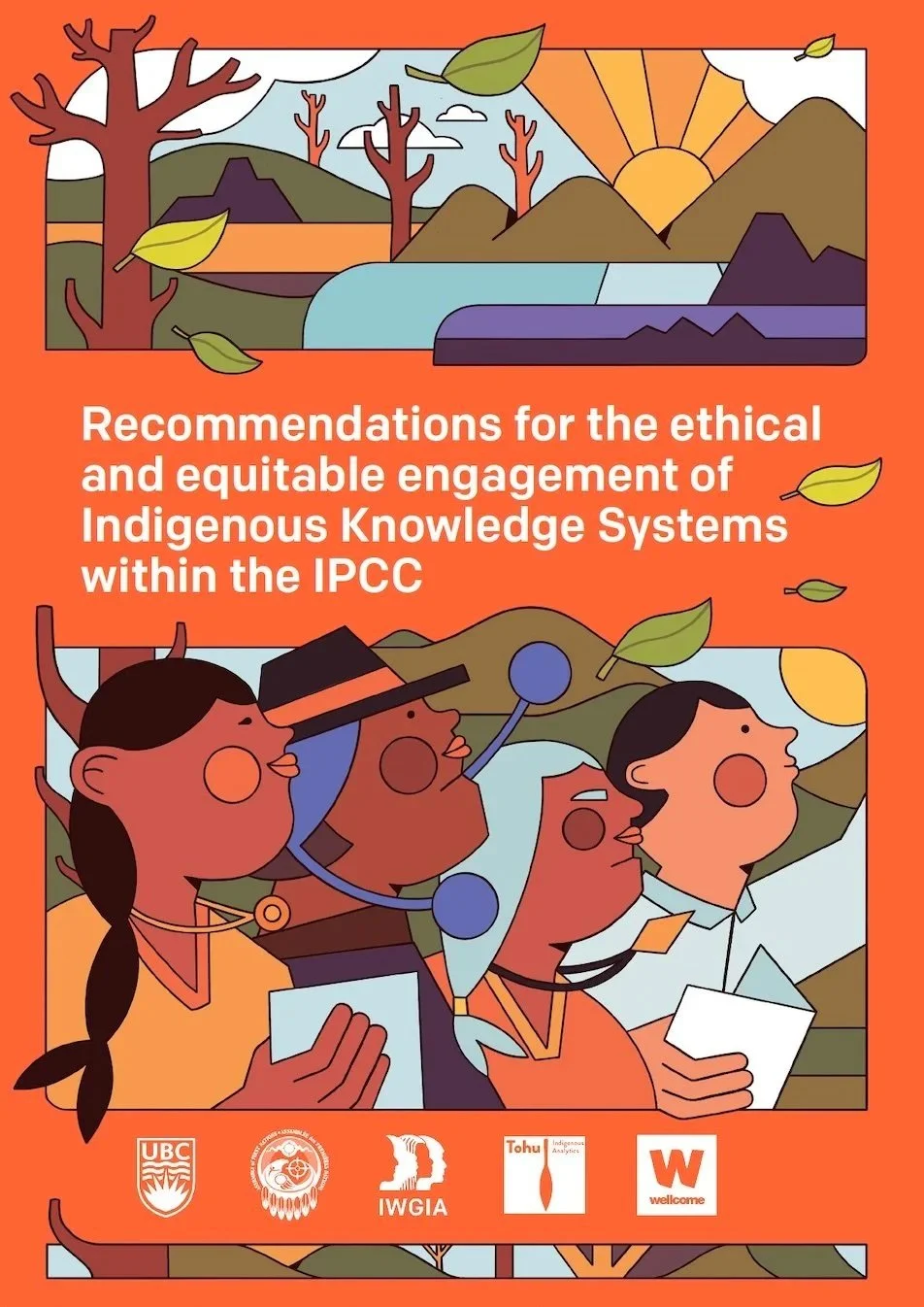
Drawing on the core team’s direct experience across AR6, a comprehensive literature review, and three multilingual listening sessions conducted in December 2025, we begin by identifying five framing principles to form the foundation of an ethical and equitable engagement with Indigenous Knowledge Systems: (1) Knowledge and epistemic justice; (2) Self-determination and rights-based approach; (3) Indigenous frameworks for working across knowledge systems; (4) Relational, reparative, and non-extractive engagement; and (5) Temporalities of change. Using these principles, we introduce the current barriers and opportunities within the IPCC, and then propose concrete recommendations in three areas: (1) authorship and representation; (2) methodology and assessment frameworks; and (3) institutional transformation and accountability. (This report was peer-reviewed by eight leading Indigenous scholars and practitioners representing global regions: North America, Arctic region, Latin America, Asia, Africa and the Pacific.)
Sherpa, P.Y., Reed, G., Carmona, R., Chakraborty, R. (2026). Recommendations for the Ethical and Equitable Engagement of Indigenous Knowledge Systems within the IPCC. University of British Columbia, Assembly of First Nations, International Work Group for Indigenous Affairs and Tohu Indigenous Analytics.
Access the article here.